
Unlocking the Communication Superhighway Between Brain and Gut, and Why It Changes Everything
npnHub Editorial Member: Catherine Knapp curated this blog
Key Points
- The brain-gut connection is a two-way communication system involving neural, hormonal, and immune signals.
- The vagus nerve plays a central role in transmitting signals from the gut microbiome to the brain.
- New research shows that gut bacteria directly influence mood, cognition, and even decision-making.
- Neurotransmitters like serotonin and dopamine are produced in large amounts in the gut, reshaping our view of mental health.
- Neuroscience practitioners can leverage gut-brain science to develop new interventions for anxiety, depression, and cognitive decline.
1. What is the Brain-Gut Connection?
Let’s start with a real-world moment. A coach notices a pattern – one of her clients, who struggles with anxiety, always feels calmer after lunch. Another mentions brain fog that coincides with digestive issues. At first, she chalks it up to coincidence. But after attending a neuroscience workshop, she realizes this isn’t random – it’s the brain-gut axis in action.
This story isn’t from a peer-reviewed study, but it reflects a growing awareness among neuroscience-informed practitioners.
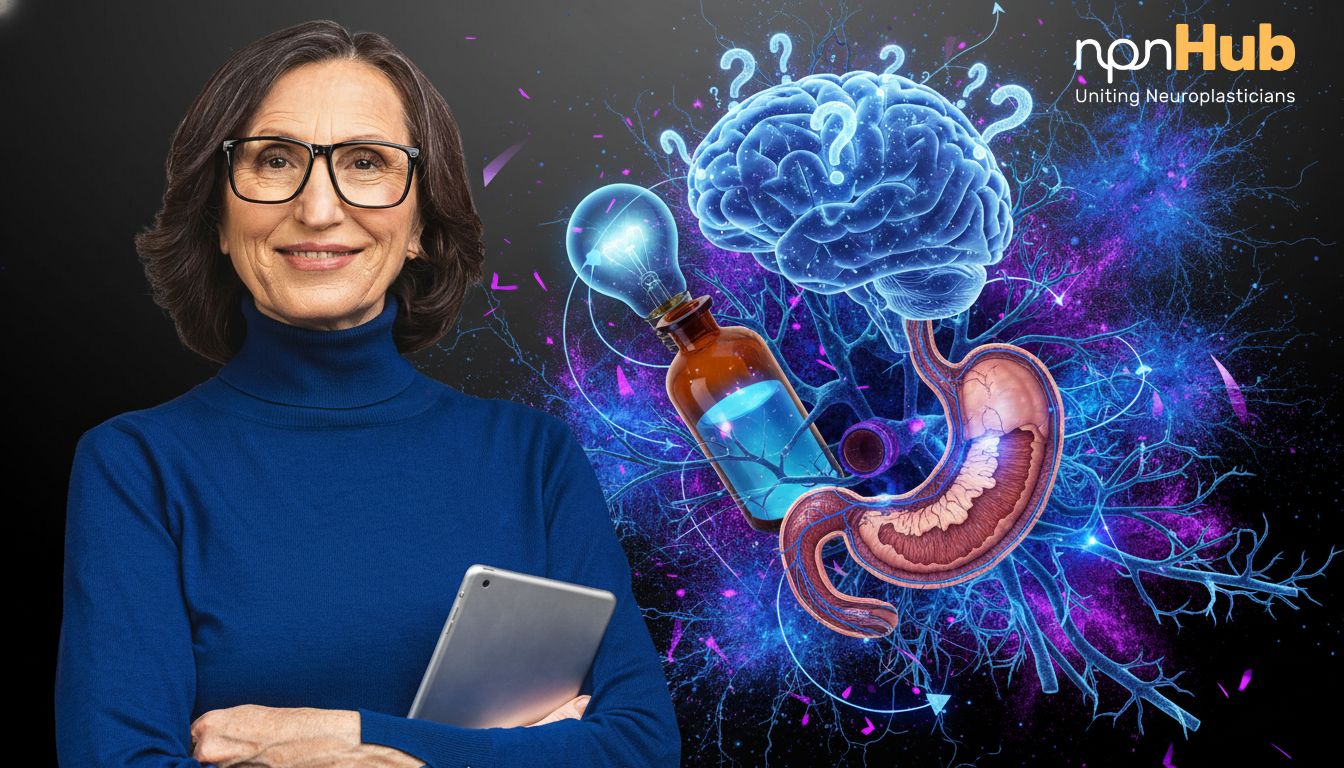
The brain-gut connection, also called the gut-brain axis, refers to the complex communication between the central nervous system (CNS) and the enteric nervous system (ENS), sometimes called the “second brain.” This bidirectional link allows the gut to influence emotional and cognitive centers in the brain, and vice versa.
One of the most cited studies in this field is from Dr. Emeran Mayer at UCLA, who showed that gut microbes could influence brain structure and function through the vagus nerve and immune signaling pathways (Mayer et al., 2015, NIH).
The result? Our gut doesn’t just digest food – it helps shape how we think, feel, and behave.
2. The Neuroscience of the Brain-Gut Connection
Picture this: A neuroplasticity coach is working with a teenager who has ADHD. The student struggles with focus and mood swings. After eliminating processed foods and introducing fermented foods and fiber-rich meals, the coach notices a significant shift—not just in energy levels but in emotional regulation.
Again, this is an illustrative case, not a clinical trial, but it reflects emerging trends in applied neuroscience.
At the core of this connection is the vagus nerve, a cranial nerve that sends real-time updates from the gut to the brain. In fact, about 80% of vagal fibers are afferent, meaning they send signals from the body to the brain, not the other way around.
The gut microbiota (trillions of bacteria and microbes living in the digestive tract) communicate with the brain via:
- Neurotransmitters (like serotonin, 90% of which is made in the gut)
- Immune system cytokines
- Short-chain fatty acids that affect blood-brain barrier permeability
According to research published in Nature Microbiology (Cryan et al., 2019), certain bacteria like Lactobacillus and Bifidobacterium can modulate GABA and serotonin levels, influencing mood and stress responses (Cryan et al., 2019).
So, the brain-gut axis isn’t a metaphor – it’s a functional, neurochemical system that shapes cognitive and emotional health.
3. What Neuroscience Practitioners, Neuroplasticians and Well-being Professionals Should Know About the Brain-Gut Connection
During a practitioner roundtable, a well-being coach asked, “Can improving gut health really help my clients with burnout?” Another added, “One of my clients stopped antidepressants after starting a probiotic protocol – what’s the science behind that?”
These aren’t fringe questions anymore. They reflect a major shift in how we understand mental health and brain performance.
Practitioners need to know that:
- The gut-brain axis is a key player in anxiety, depression, attention, and even decision-making.
- Nutrition and gut health are now considered essential pillars in mental well-being strategies.
- Common misconceptions include:
- Myth: Mental health is entirely in the brain.
Fact: The gut influences emotional regulation through neurotransmitters and immune signals. - Myth: Gut bacteria only affect digestion.
Fact: They affect cognitive function, mood, and even memory. - Myth: All probiotics are the same.
Fact: Specific strains produce specific neuroactive compounds—targeted strains are necessary for clinical results (Sarkar et al., 2016).
- Myth: Mental health is entirely in the brain.
Three frequently asked questions practitioners encounter:
- Can improving gut health reduce my client’s anxiety or depression symptoms?
- Are there specific probiotic strains that impact mood and cognition?
- How do dietary changes influence brain performance over time?
These questions are not only relevant, they’re foundational to the emerging field of nutritional neuroscience.
4. How the Brain-Gut Axis Affects Neuroplasticity
Neuroplasticity is the brain’s ability to change in response to experience, and the gut plays a surprising role in that.
Repeated dietary choices shape the gut microbiota, which in turn influence brain-derived neurotrophic factor (BDNF), a key molecule in synaptic plasticity. Studies show that gut inflammation can suppress BDNF, impairing learning and memory, while a diverse, healthy microbiome supports higher BDNF levels and synaptic growth.
For example, a 2015 study published in Frontiers in Aging Neuroscience found that gut dysbiosis in older adults was associated with reduced hippocampal volume and poor memory performance (Mohle et al., 2015).
In other words, what we feed our gut directly influences how well we form memories, regulate emotions, and adapt behaviorally. Practitioners who understand this can guide clients through targeted dietary shifts that activate and strengthen positive neuroplastic pathways.
5. Neuroscience-Backed Interventions to Improve the Brain-Gut Connection
Why Behavioral Interventions Matter
Many clients unknowingly sabotage their brain performance through poor gut health – processed food, chronic stress, and antibiotics disrupt the microbiome, leading to cognitive and emotional instability. Practitioners must guide clients to reset this system.
1. Introduce Probiotic-Rich Foods
Concept: Fermented foods introduce beneficial microbes that influence brain chemistry and reduce inflammation (Kim B. et al., 2016).
Example: A well-being practitioner introduced kimchi and kefir to a client with social anxiety. Within weeks, the client reported better digestion, sleep, and emotional resilience.
✅ Intervention:
- Encourage daily consumption of fermented foods like yogurt, kefir, kimchi, and sauerkraut.
- Track digestive and mood changes in a journal.
- Gradually introduce probiotic supplements if needed (strain-specific, e.g., Lactobacillus rhamnosus).
2. Reduce Processed Sugars and Emulsifiers
Concept: Additives damage gut lining and disrupt microbiota balance, increasing brain inflammation (Harvard Health Publishing).
Example: A neurocoach helped a teen client remove soft drinks and refined carbs, which improved their mood swings and academic focus.
✅ Intervention:
- Eliminate high-fructose corn syrup and artificial sweeteners.
- Read labels for emulsifiers and preservatives.
- Replace with whole foods like fruits, nuts, and legumes.
3. Vagal Nerve Stimulation Practices
Concept: Activating the vagus nerve improves gut-brain communication and emotional regulation (Breit et al., 2018).
Example: A mindfulness coach used breathwork and cold exposure with clients who experienced chronic stress and digestive issues.
✅ Intervention:
- Practice deep diaphragmatic breathing (5-10 minutes/day).
- Use cold face immersion or showers to stimulate vagus activity.
- Encourage humming or chanting to activate vagal tone.
4. Polyphenol and Fiber Intake
Concept: Fiber feeds beneficial gut bacteria; polyphenols (from berries, green tea, cacao) reduce inflammation and support cognitive function (Nutrients Journal, 2020).
Example: A cognitive therapist designed a “brain-boosting breakfast” protocol rich in oats, flaxseeds, and blueberries for clients with burnout.
✅ Intervention:
- Recommend high-fiber breakfasts with added berries and seeds.
- Incorporate polyphenol-rich teas and snacks into daily routines.
- Reduce inflammatory oils and processed snacks.
5. Psychoeducation on the Brain-Gut Axis
Concept: Clients are more likely to change habits when they understand the science behind them (Harvard Mind Brain Behavior Initiative).
Example: A coach ran a workshop called “Your Second Brain” to help clients link digestive health with performance and emotion regulation.
✅ Intervention:
- Use visual aids to explain the vagus nerve and microbiota.
- Include testimonials and case studies in sessions.
- Offer gut health tracking worksheets and mobile apps.
6. Key Takeaways
The brain-gut connection is transforming how we understand mood, focus, and mental resilience. It’s not just what we think that shapes our brain – but what we eat, digest, and absorb.
As a neuroscience-informed professional, integrating gut-health awareness into your coaching or therapy practice can unlock faster, more sustainable transformations.
🔹 Gut microbiota influence neurotransmitters, brain structure, and emotional states.
🔹 The vagus nerve is a critical link in brain-gut communication.
🔹 Dietary changes and targeted supplements can improve neuroplasticity.
🔹 Educating clients about the brain-gut axis enhances motivation and compliance.
7. References
- Mayer, E. A. et al. (2015). Gut Microbes and the Brain: Paradigm Shift in Neuroscience. NIH.https://pmc.ncbi.nlm.nih.gov/articles/PMC4228144/
- Cryan, J. F. et al. (2019). The Microbiota-Gut-Brain Axis. Nature Microbiology.https://pubmed.ncbi.nlm.nih.gov/31460832/
- Sarkar, A. et al. (2016). Psychobiotics and the Manipulation of Bacteria–Gut–Brain Signals. Trends in Neurosciences.https://www.sciencedirect.com/science/article/pii/S0166223616301138
- Son, S. J., Lee, D. Y., Roh, H. W., et al. (2025). Brain age mediates gut microbiome dysbiosis-related cognition in older adults. Alzheimer’s Research & Therapy, 17, 52. https://doi.org/10.1186/s13195-025-01697-8
- Breit, S. et al. (2018). Vagus Nerve as Modulator of the Brain–Gut Axis. Frontiers in Psychiatry.https://pubmed.ncbi.nlm.nih.gov/29593576/
- Nutrients Journal (2020). Gut Microbiota–Brain Axis and Mental Health.https://pmc.ncbi.nlm.nih.gov/articles/PMC5641835/
- Kim, B., Hong, V. M., Yang, J., et al. (2016). A review of fermented foods with beneficial effects on brain and cognitive function. Preventive Nutrition and Food Science, 21(4), 297–309. https://doi.org/10.3746/pnf.2016.21.4.297