
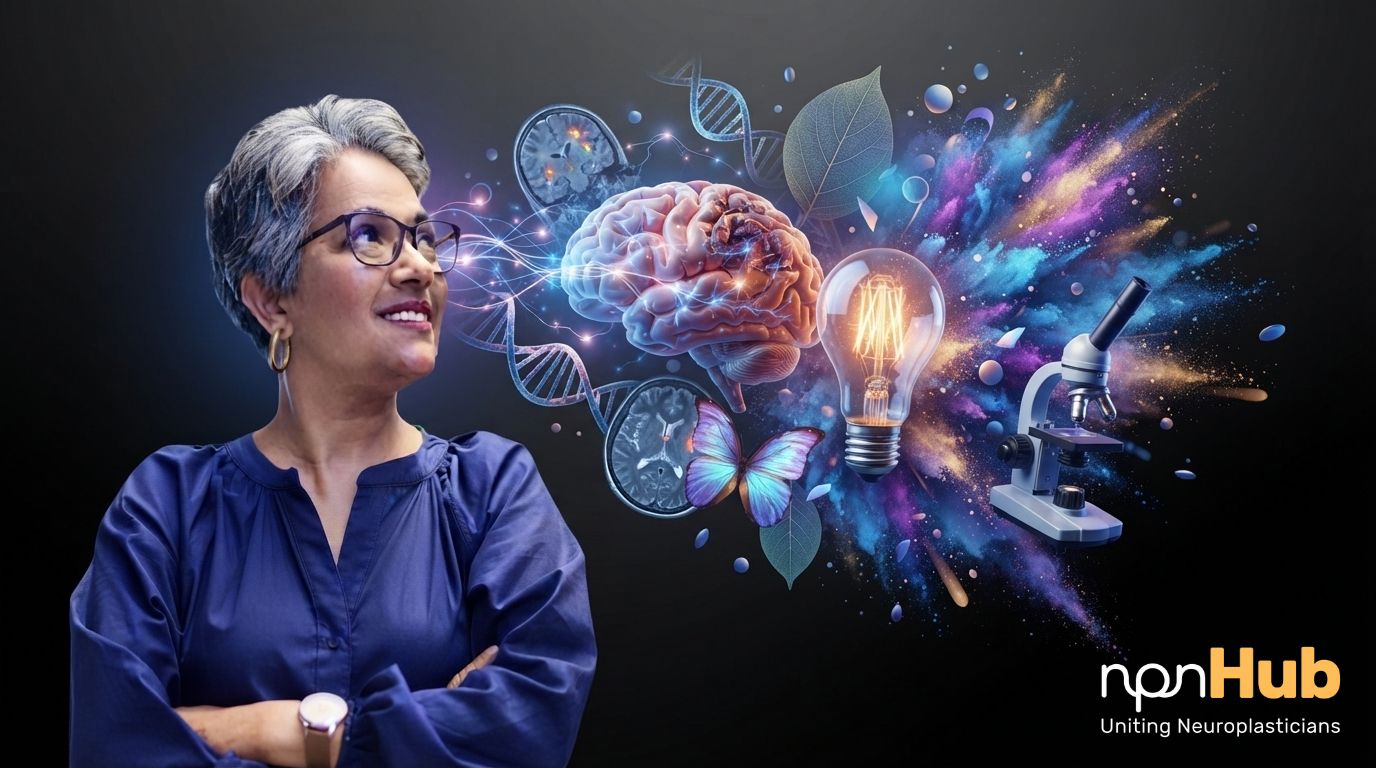
How the injured brain adapts through rehabilitation, repetition, compensation, and recovery-focused practice
npnHub Editorial Member: Willem Royaards curated this blog
Key Points
- Brain injury recovery depends partly on neuroplasticity, the nervous system’s ability to reorganize structure, function, and connections after damage.
- Recovery is not about the brain simply “going back to normal.” It often involves repair, compensation, relearning, adaptation, and new pathway development.
- Neuroplasticity after brain injury is shaped by timing, repetition, intensity, task specificity, emotional salience, feedback, sleep, and rehabilitation support.
- Brain regions involved may include the cortex, hippocampus, cerebellum, basal ganglia, thalamus, corpus callosum, prefrontal cortex, and surviving networks around or distant from the injured area.
- Recovery varies widely depending on injury type, severity, location, age, health, access to rehabilitation, and psychological support.
- Practitioners can support brain injury recovery by reinforcing realistic hope, structured practice, pacing, compensatory strategies, and referral to qualified clinical teams.
1. What is Neuroplasticity in Brain Injury Recovery?
Imagine a neuroscience practitioner working with a client who is recovering after a mild traumatic brain injury. The client says, “I feel like I should be back to normal by now.” They can hold a conversation, but fatigue arrives quickly. Reading takes more effort. Noise feels overwhelming. The practitioner explains that recovery is not always a straight road. The brain may be healing, adapting, rerouting, and relearning at different speeds.
This is an illustrative example, not a scientific case.
Neuroplasticity in brain injury recovery refers to the brain’s ability to reorganize after damage. This may involve strengthening surviving pathways, recruiting nearby or distant brain regions, forming new connections, changing cortical maps, and learning compensatory strategies. Recovery can happen after different forms of acquired brain injury, including traumatic brain injury, stroke, infection, tumor-related injury, oxygen deprivation, or other neurological damage.
The important point is that neuroplasticity does not mean unlimited recovery. The brain is adaptable, but it is also biological. Recovery depends on the type and severity of injury, which networks are affected, medical stability, rehabilitation access, timing, motivation, fatigue, mood, sleep, and the person’s environment.
Nudo explains that acquired brain injuries such as stroke or trauma can initiate regenerative and plasticity-related events that may last for weeks or months, creating opportunities for recovery-focused intervention (Nudo, 2013). Kleim and Jones also describe neural plasticity as a basis for both learning in the intact brain and relearning in the damaged brain during rehabilitation (Kleim & Jones, 2008).
For practitioners, the message is hopeful but careful: the injured brain can often adapt, but it needs the right conditions, the right support, and realistic pacing.
2. The Neuroscience of Brain Injury Recovery
Imagine an educator teaching coaches about post-injury recovery. She draws a road map on the board. One route is blocked by damage. Traffic does not disappear. It slows, reroutes, and sometimes builds new patterns. “This,” she explains, “is a simplified way to think about post-injury neuroplasticity.”
This is an illustrative example, not a scientific reference.
When the brain is injured, several processes may unfold. Some neurons and connections may be damaged directly. Other regions may become less efficient because they were connected to the injured area. Inflammation, swelling, disrupted blood flow, metabolic stress, and changes in neurotransmission can affect functioning. Later, the brain may begin reorganizing through synaptic changes, axonal sprouting, dendritic remodeling, cortical map shifts, and altered network connectivity.
The cortex is often central because many injuries affect movement, language, attention, perception, or executive function. The hippocampus may be involved in memory changes. The prefrontal cortex supports planning, inhibition, and self-monitoring. The cerebellum contributes to movement coordination and cognitive timing. The basal ganglia support action selection and habit learning. The corpus callosum and white matter pathways help communication between brain regions.
Murphy and Corbett describe plasticity during stroke recovery as involving activity-dependent rewiring, synapse strengthening, and modification of surviving neuronal networks (Murphy & Corbett, 2009). Cramer and colleagues define neuroplasticity as the nervous system’s ability to respond to internal or external stimuli by reorganizing structure, function, and connections, and they emphasize that clinical translation requires reliable behavioral improvement in humans (Cramer et al., 2011).
The main brain areas affected depend on the injury, but recovery often involves surviving cortical networks, motor cortex, sensory cortex, hippocampus, thalamus, cerebellum, basal ganglia, prefrontal cortex, corpus callosum, and large-scale functional networks.
3. What Neuroscience Practitioners, Neuroplasticians and Well-being Professionals Should Know About Brain Injury Recovery
A coach may work with a client who says, “I did my exercises for one week, and nothing changed.” The practitioner does not dismiss the frustration. Instead, they explain that neuroplastic recovery depends on repeated, targeted practice over time, and that progress may appear first as less fatigue, faster recovery, smoother movement, improved attention, or better strategy use before dramatic functional change is visible.
This is an illustrative example, not a scientific case.
Professionals should know that brain injury recovery is highly individual. Two people with similar injuries can recover differently because no two brains, bodies, histories, support systems, or rehabilitation pathways are identical. Recovery may include restoration of function, compensation through new strategies, environmental adaptation, and emotional adjustment.
A common myth is that recovery only happens in the first few weeks. Early recovery is important, and some plasticity windows may be time-sensitive, but improvement can continue later with appropriate practice and support. Another myth is that more effort is always better. After brain injury, overexertion can worsen fatigue, headaches, irritability, or cognitive overload. The brain needs challenge and recovery.
Professionals often encounter questions such as:
- Can the brain rewire after injury?
- Why does recovery feel uneven from day to day?
- How much practice is helpful before fatigue becomes harmful?
Kleim and Jones outline rehabilitation-relevant principles of experience-dependent plasticity, including use it or lose it, use it and improve it, specificity, repetition, intensity, salience, and interference (Kleim & Jones, 2008). These principles help practitioners explain why random activity is not the same as targeted rehabilitation.
For practitioners, the safest role is to support brain-friendly conditions while staying within scope. Brain injury rehabilitation should involve qualified medical and rehabilitation professionals, such as neurologists, physiotherapists, occupational therapists, speech-language therapists, neuropsychologists, rehabilitation physicians, and mental health clinicians when needed.
4. How Brain Injury Recovery Affects Neuroplasticity
Brain injury recovery affects neuroplasticity because the injured brain enters a period of adaptation. Some changes are spontaneous. Some are guided by rehabilitation. Some are helpful. Some can become maladaptive. This is why recovery should be shaped carefully.
After injury, surviving networks may become more important. Nearby regions may take on part of a lost function. Distant networks may compensate. Repeated practice can strengthen useful pathways. However, compensation can also become limiting if a person avoids using an affected limb, avoids cognitive challenge entirely, or learns inefficient strategies that later become hard to change.
Nudo describes parallels between post-injury plasticity and developmental plasticity, including changes in growth-related processes and neural reorganization after acquired brain injury (Nudo, 2013). This does not mean the injured adult brain becomes like a child’s brain. It means injury may reopen certain adaptive processes that rehabilitation can attempt to guide.
Neuroplasticity after brain injury is strongly shaped by behavior. If a client repeatedly practices a meaningful task, the brain receives information about what matters. If practice is too easy, there may be little growth. If it is too difficult, the nervous system may shut down. If the task is meaningful, specific, and repeated with feedback, learning becomes more likely.
For neuroplasticity practitioners, this is the core message: the brain after injury is not simply damaged. It is also learning. The question is whether the environment, practice, and support are teaching the brain pathways that support function, independence, and wellbeing.
5. Neuroscience-Backed Interventions to Support Brain Injury Recovery
Behavioral interventions matter because neuroplastic recovery is experience-dependent. The injured brain needs repeated, meaningful, specific experiences that are matched to the person’s current capacity. The main challenge is balance. Too little challenge may limit progress, but too much can overload the recovering brain. Practitioners should work alongside medical and rehabilitation teams and avoid making promises about recovery speed or outcome.
1. The Task-Specific Practice Loop
Concept: Neuroplasticity after brain injury is shaped by specificity and repetition. Kleim and Jones identify task specificity and repetition as key principles of experience-dependent neural plasticity for rehabilitation after brain damage (Kleim & Jones, 2008).
Example: A practitioner supports a client recovering hand function after brain injury. Instead of only doing general exercises, the client practices meaningful daily actions recommended by their rehabilitation team, such as grasping a cup, buttoning clothing, or using utensils.
Intervention:
- Identify one meaningful function the client wants to improve.
- Break the function into small practice steps.
- Repeat the practice consistently within clinical guidance.
- Keep the task specific to the real-life skill.
- Track small functional gains, not only perfect performance.
2. The Graded Challenge and Rest Balance
Concept: Recovery after brain injury requires enough challenge to engage plasticity, but not so much that the nervous system becomes overloaded. Nudo explains that acquired brain injury can trigger plasticity-related processes lasting weeks or months, creating a period where rehabilitation can help shape recovery (Nudo, 2013).
Example: A wellbeing professional works with a client who tries to return to full workdays too quickly after concussion. The practitioner helps the client pace cognitive activity, track fatigue, and coordinate with medical providers.
Intervention:
- Ask the client to notice early fatigue signals.
- Use short practice periods followed by planned rest.
- Increase difficulty gradually only when symptoms remain stable.
- Avoid pushing through severe headache, dizziness, confusion, or overload.
- Encourage communication with the rehabilitation or medical team.
3. The Compensation Without Shame Map
Concept: Neuroplasticity includes both restoration and compensation. Cramer and colleagues emphasize that clinical neuroplasticity work must focus on meaningful behavioral improvements, not only biological markers (Cramer et al., 2011).
Example: A coach works with a client who feels embarrassed using reminders after a memory-related brain injury. The practitioner reframes reminders as brain-supportive scaffolding, not failure.
Intervention:
- Identify the function that currently needs support.
- Choose one compensatory tool, such as reminders, checklists, calendars, labels, or routines.
- Practice using the tool consistently.
- Reduce shame by explaining compensation as adaptation.
- Review whether the tool improves daily independence.
4. The Meaningful Feedback Cycle
Concept: Recovery is strengthened when practice gives the brain useful feedback about performance. Murphy and Corbett describe stroke recovery as involving modification of surviving neuronal networks through activity-dependent plasticity (Murphy & Corbett, 2009).
Example: A neuroplastician works alongside a rehabilitation plan for a client rebuilding walking confidence. The client tracks distance, balance confidence, fatigue, and emotional response so that practice becomes measurable and motivating.
Intervention:
- Choose one function to track.
- Use simple feedback, such as time, repetitions, accuracy, ease, or fatigue.
- Celebrate small improvements that show the brain is learning.
- Adjust practice when feedback shows overload or frustration.
- Use feedback to guide the next realistic step.
6. Key Takeaways
Brain injury recovery is not a simple return to the old brain. It is a process of repair, reorganization, compensation, relearning, and adaptation. Neuroplasticity gives the brain a pathway for change, but that pathway must be supported with appropriate rehabilitation, repetition, rest, emotional safety, and realistic expectations.
For practitioners, the goal is to offer hope without hype. The injured brain can often learn new pathways, but recovery varies widely. Clients need skilled clinical care, meaningful practice, pacing, feedback, and compassionate support.
- Neuroplasticity helps the injured brain reorganize after damage.
- Recovery may involve restoration, compensation, or both.
- Specific, repeated, meaningful practice supports rehabilitation-related plasticity.
- Too much challenge can overload the recovering brain, while too little may limit progress.
- Compensation tools can increase independence and should not be framed as failure.
- Practitioners should work within scope and encourage collaboration with qualified rehabilitation professionals.
7. References
- Cramer, S. C., Sur, M., Dobkin, B. H., O’Brien, C., Sanger, T. D., Trojanowski, J. Q., Rumsey, J. M., Hicks, R., Cameron, J., Chen, D., Chen, W. G., Cohen, L. G., deCharms, C., Duffy, C. J., Eden, G. F., Fetz, E. E., Filart, R., Freund, M., Grant, S. J., Haber, S., Kalivas, P. W., Kolb, B., Kramer, A. F., Lynch, M., Mayberg, H. S., McQuillen, P. S., Nitkin, R., Pascual-Leone, A., Reuter-Lorenz, P., Schiff, N., Sharma, A., Shekim, L., Stryker, M., Sullivan, E. V., & Vinogradov, S. (2011). Harnessing neuroplasticity for clinical applications. Brain, 134(6), 1591–1609. https://academic.oup.com/brain/article/134/6/1591/369496
- Kleim, J. A., & Jones, T. A. (2008). Principles of experience-dependent neural plasticity: Implications for rehabilitation after brain damage. Journal of Speech, Language, and Hearing Research, 51(1), S225–S239. https://europepmc.org/abstract/MED/18230848
- Murphy, T. H., & Corbett, D. (2009). Plasticity during stroke recovery: From synapse to behaviour. Nature Reviews Neuroscience, 10, 861–872. https://www.nature.com/articles/nrn2735
- Nudo, R. J. (2013). Recovery after brain injury: Mechanisms and principles. Frontiers in Human Neuroscience, 7, 887. https://www.frontiersin.org/journals/human-neuroscience/articles/10.3389/fnhum.2013.00887/full
8. Useful Links
- Discover neuroscience in your practice with a recognised credential
- Self mastery through Neuroscience
- Neuroplasticity for Coaches : From understanding the brain to working with it
- Frontiers in Human Neuroscience: Recovery After Brain Injury
- Brain: Harnessing Neuroplasticity for Clinical Applications
- Nature Reviews Neuroscience: Plasticity During Stroke Recovery
- Europe PMC: Principles of Experience-Dependent Neural Plasticity
- National Institute of Neurological Disorders and Stroke: Traumatic Brain Injury